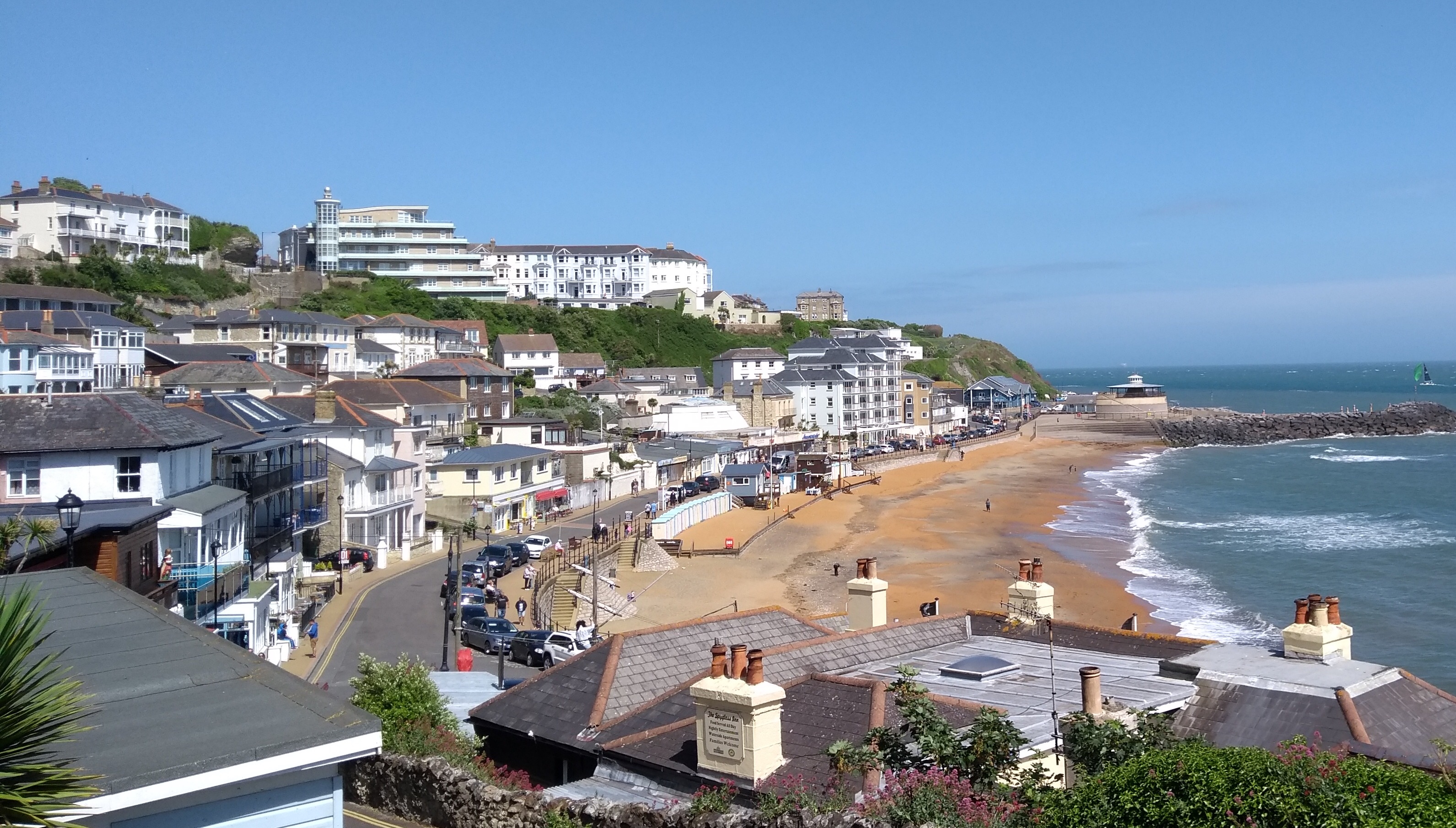
Ventnor
Ventnor is a seaside resort town and civil parish established in the Victorian era on the southeast coast of the Isle of Wight, England, 11 miles (18 km) from Newport.
It is situated south of St Boniface Down, and built on steep slopes leading down to the sea. The higher part is referred to as Upper Ventnor ; the lower part, where most amenities are located, is known as Ventnor. Ventnor is sometimes taken to include the adjacent older settlements of St Lawrence and Bonchurch, which are covered by its town council. The population is 5,567 according to the 2021 Census.
Getting to Ventnor
The town is linked to other parts of the Island by Southern Vectis bus service 3, running at half-hourly intervals and 6, running at hourly intervals.
Worth seeing
- 01The Botanical Gardens
These gardens are some of the best in the country, due to Ventor's unusual climate, being very southern and sheltered by the hill to the north.
- 02Ventnor Heritage Museum
This small museum offers a wealth of information and photographic history of Ventnor's past, as well as many small books and pamphlets, many written by local volunteers.
- 03Appuldurcombe House
Adults £4.00, children £3.00, concessions £3.50.
- 04Steephill Cove
A cove only accessible by foot at the southernmost tip of the island.
- 05Blackgang Chine
This used to be a dramatic gorge through which one could walk to the sea.
Things to do
The Undercliff The Landslip (to Luccombe and Shanklin) St. Boniface Down The beach is much smaller than the huge yellow sands at Sandown and Shanklin but it is less commercial, a better place to go to unwind. There is an arcade, and shops selling ice creams, buckets and spades and other seaside stuff. The Ventnor Fringe is an annual arts festival in July.
Where to eat
- 01The Met
Stylish tapas bar located right on the Esplanade with views out on the sea.
- 02Crave
The Ventnorian, 5 Spring Hill, Ventnor PO38 1PE.
Getting around Ventnor the local way
- Get inMost visitors will need to rely on ferry service to and from the island.
- Get inAccess is across the Solent, a narrow stretch of sea between the mainland and the island, by regular ferry, hovercraft or fast-cat.
- Get inMany of the ferries carry cars, but this can be expensive; the alternative is to leave the car behind and use buses and trains on the island, but this will limit access to more rural locations and beaches.
- Get inCar tickets are for a car plus four passengers and depending on the size of your party bringing a car may actually work out cheaper than the passenger ferry.
- Get inIf taking a car on a vehicle ferry, it's strongly advised to book in advance, and is essential during the summer holidays.
- Get inThe major ferry routes and trip durations from the mainland to the island are: Wightlink car ferry – Portsmouth to Fishbourne (near Ryde); 45 min.
- Get inWightlink car and passenger ferry – Lymington to Yarmouth on the west end of the island; 40 min.
- Get inRed Funnel car and passenger ferry – Southampton Town Quay to east Cowes; 55 min.
From Wikivoyage: Isle of Wight, CC BY-SA. Not yet checked by us. Last edited 2026-08.
Text adapted from Wikipedia and Wikivoyage, CC BY-SA 4.0. Photograph: Wikimedia Commons (see Commons), Wikimedia Commons.