Raj
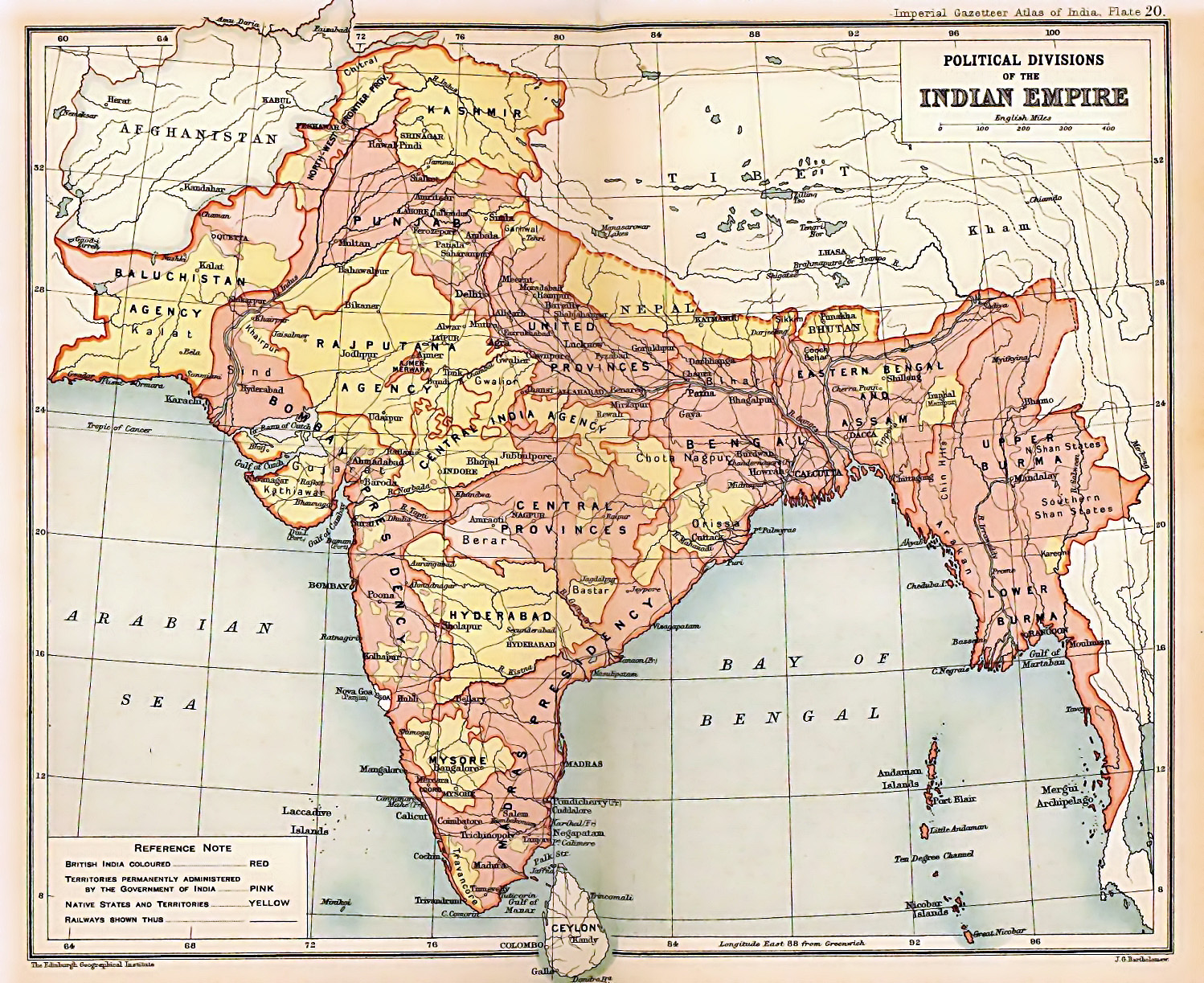
The British Raj was the period of rule of the British Crown on the Indian subcontinent, lasting from 1858 to 1947.
It is also called Crown rule in India, or direct rule in India. The region under British control was commonly called India in contemporaneous usage and included areas directly administered by the United Kingdom, which were collectively called British India, and areas ruled by indigenous rulers, but under British paramountcy, called the princely states. The region was sometimes called the Indian Empire, though not officially. As India, it was a founding member of the League of Nations and a founding member of the United Nations in San Francisco in 1945. India was a participating state in the Summer Olympics in 1900, 1920, 1928, 1932, and 1936.
Worth seeing
The British left behind a legacy of great architecture which is still evident in many parts of South Asia, including neo-Gothic and European styles of churches, which can be seen in what is today are railway stations, cantonments, courts, colleges and schools, churches, bridges and museums.
Where to eat
An Anglo-Indian cuisine developed, largely based on dishes that Indian cooks made for their British employers during the Raj. Some of the resulting dishes became more generally popular in India and remained part of Indian cuisine after independence, and many of them are also now popular with Britons in the United Kingdom, and elsewhere around the world where there are Indian restaurants.
Text adapted from Wikipedia and Wikivoyage, CC BY-SA 4.0. Photograph: Wikimedia Commons (see Commons), Wikimedia Commons.