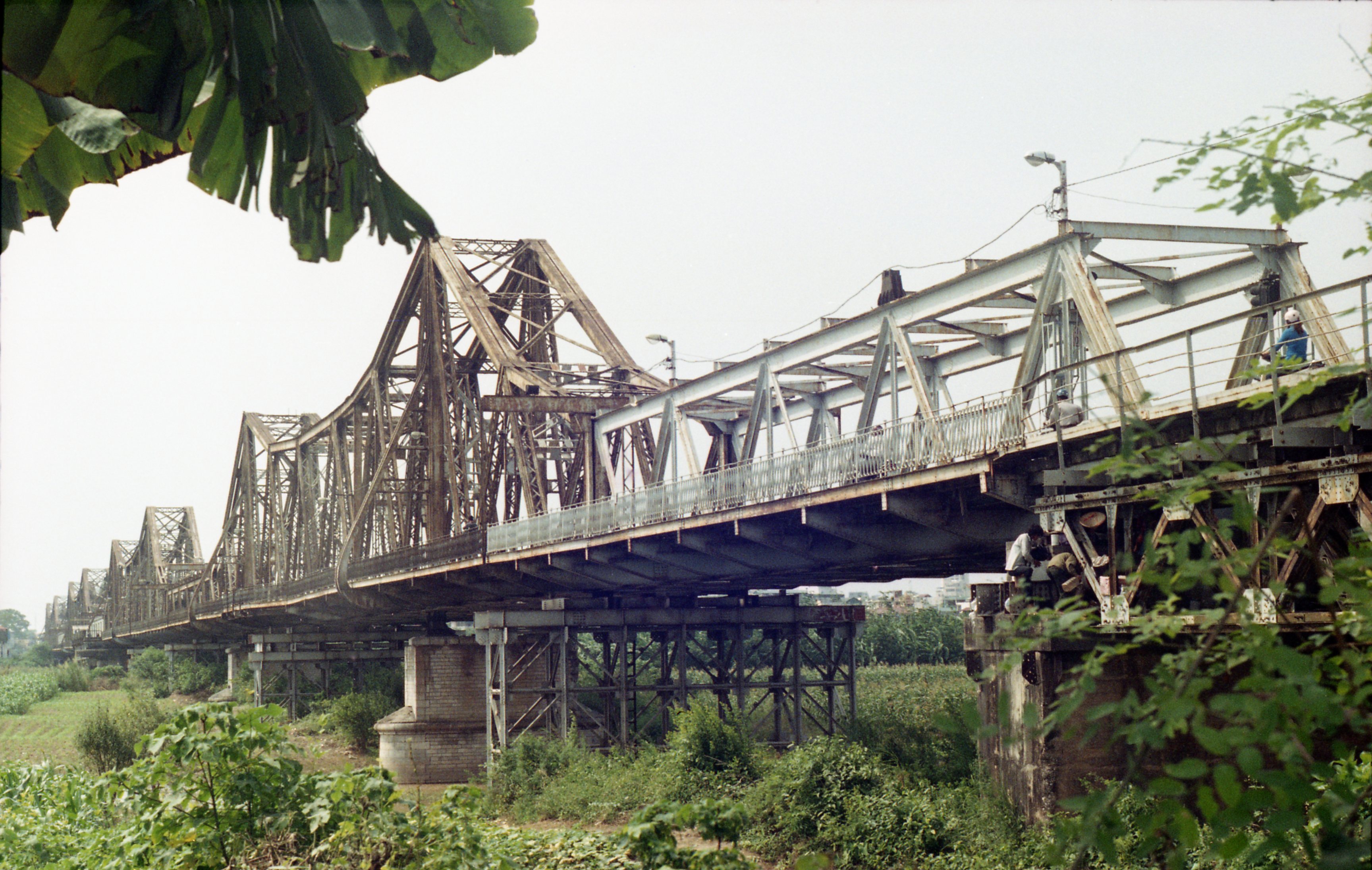
Long Biên
Long Biên (Vietnamese), also known as Longbian was the capital of the Chinese Jiao Province and Jiaozhi Commandery during the Han dynasty.
It was located on the Red River in modern-day Bac Ninh. After Ly Bi's successful revolt in AD 544, it served as the capital of Van Xuan. When the Sui dynasty of China retook the territory in 603, the Sui general Liu Fang moved the capital to nearby Tống Bình. Long Biên flourished as a trading port in the late 8th and early 9th centuries. Thăng Long was founded in 1010 at the site of earlier Chinese fortresses nearby. This grew into modern Hanoi, which incorporated Long Biên as one of its districts.
Getting around Long Biên the local way
- Get inBy shuttle bus – (It is not clear if these are still running as of June 2022.) Hourly between the airport and the Tickets at the airport are sold in the building in front of which the minibuses park, or you can give the fare directly to the driver.
- Go nextThe Sapa mountain region close to the Chinese border, home to ethnic minorities, gorgeous mountain scenery, and trekking paths connecting many tiny mountain villages, is the second-most popular trip.
- Go next320 km northwest from the capital, Sapa is accessible by direct private bus services from Hanoi, which now only takes 5h30 thanks to excellent new highways; or by 8-hour train journey from Hanoi Station to Lao Cai, then onward by minibus or hired motorbike.
- Go nextTam Coc/Hoa Lu in Ninh Binh Province, is a day trip is combining heritage tourism and natural landscape tourism.
From Wikivoyage: Hanoi, CC BY-SA. Not yet checked by us. Last edited 2026-09.
Text adapted from Wikipedia, CC BY-SA 4.0. Photograph: Wikimedia Commons (see file page), Wikimedia Commons.