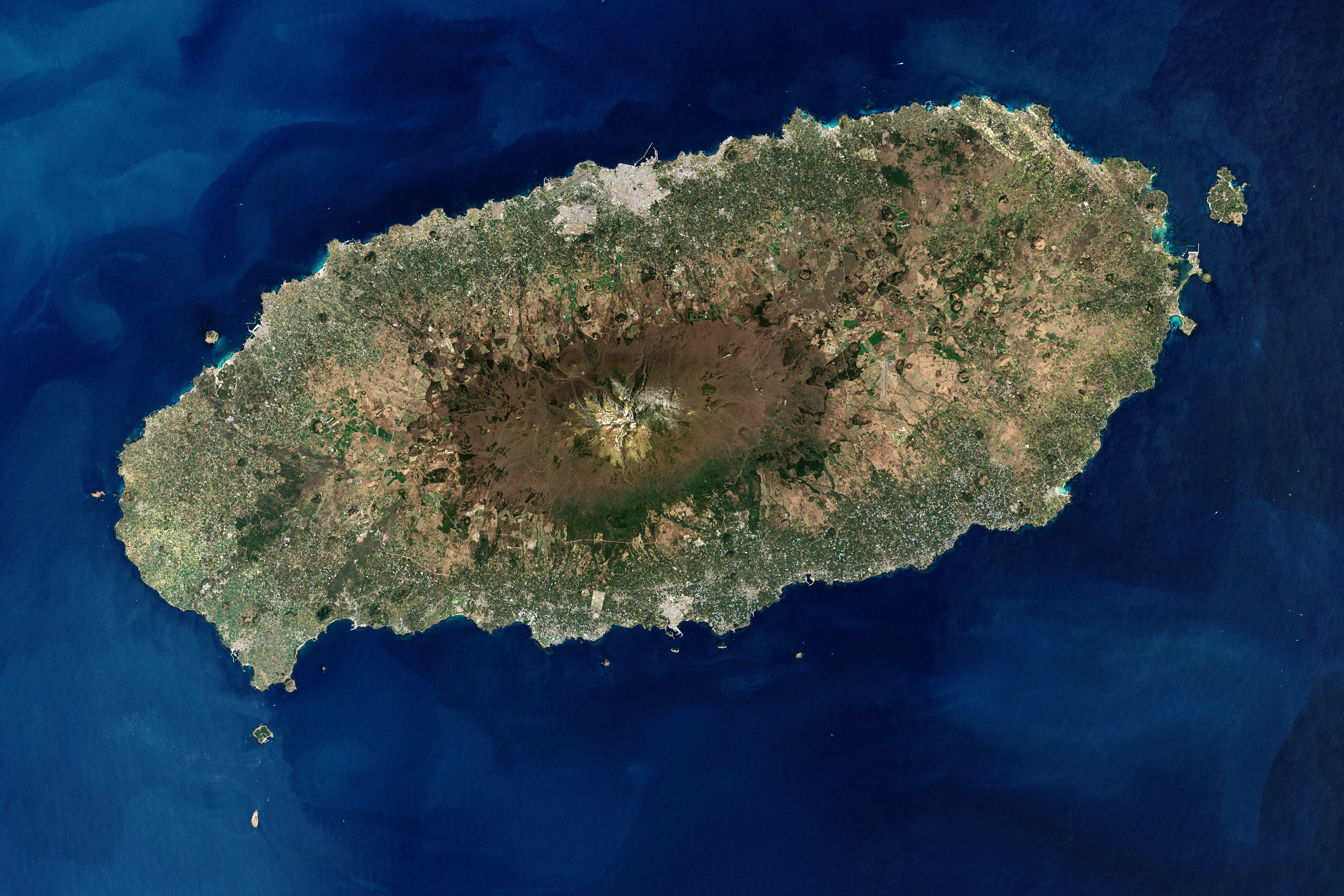
Jeju
Jeju Island is South Korea's largest island, covering an area of 1,833.2 km2 (707.8 sq mi), which is 1.83% of the total area of the country.
Alongside outlying islands, it is part of Jeju Province and makes up the majority of the province.
Getting to Jeju
Jeju has implemented the Korean Electronic Travel Authorization (K-ETA) requirement for travelers from visa-waiver nations. Eligible travelers must apply for a K-ETA within 72 hours of departure, even if flying directly to Jeju without stopping on the South Korea mainland. The electronic travel authorization costs ₩10,000 and is valid for two years.
Worth seeing
Lava tubes and other volcanic sights. Jeju Volcanic Island and Lava Tubes is a UNESCO World Heritage site in the "nature" category. Mount Halla (Hallasan) dominating the island is a dormant volcano and there are underground caves with lava tubes to explore on Geomeunoreum. Seongsan Ilchulbong is a tuff cone crater in Seogwipo. All three are very popular attractions and accessible. Jeju Old Government Offices.
Things to do
There are many hiking trails in the Hallasan National Park. Iho Tewoo Beach in Jeju City is close to Jeju Airport, and it is enough distance to ride a bicycle. There are white and red pony lighthouses, the slope of the beach is gentle, and there is a pine forest nearby, so it is a good place to enjoy the scenery and take a walk.}} Songaksan Mountain in Seogwipo is a good path to walk while looking at the scenery as…
Where to eat
The people of Jeju have evolved various lifestyles, depending on whether they live in fishing villages, farm villages, or mountain villages so specialties vary within the region. Life in the farm villages was centered on farming, as it did around fishing or diving fishery in fishing villages, and did around dry-field farming or mushroom/mountain-green gathering in the mountain areas.
Getting around Jeju the local way
- Get inFerry access from the mainland is also available, although the increasingly low price of flying means that fewer people are using this.
- Get inServices are comparatively infrequent and slow but are reasonable value after factoring in accommodation savings made on overnight ferries.
- Get inThere are daily services from a number of ports: Nokdong New Port Coastal Ferry Terminal: this terminal in Goheung has ferries to Jeju Island as well as Jeollanam-do islands including Heuksando, Hongdo and Gageodo.
- Get inFerries leave every day at 9:00 for a journey time to Jeju of 3.5 hours.
- Get inFerries do not run on the first and third Sundays of each month.
- Get inWando: 3 hours The car ferry from Yeosu to Jeju.
- Get inNote that ferries from Busan, Incheon and Mokpo no longer run as of 2024.
- Go nextWithin South Korea there are also ferries to and from Jeju.
From Wikivoyage: Jeju, CC BY-SA. Not yet checked by us. Last edited 2026-09.
Text adapted from Wikipedia and Wikivoyage, CC BY-SA 4.0. Photograph: Wikimedia Commons (see Commons), Wikimedia Commons.