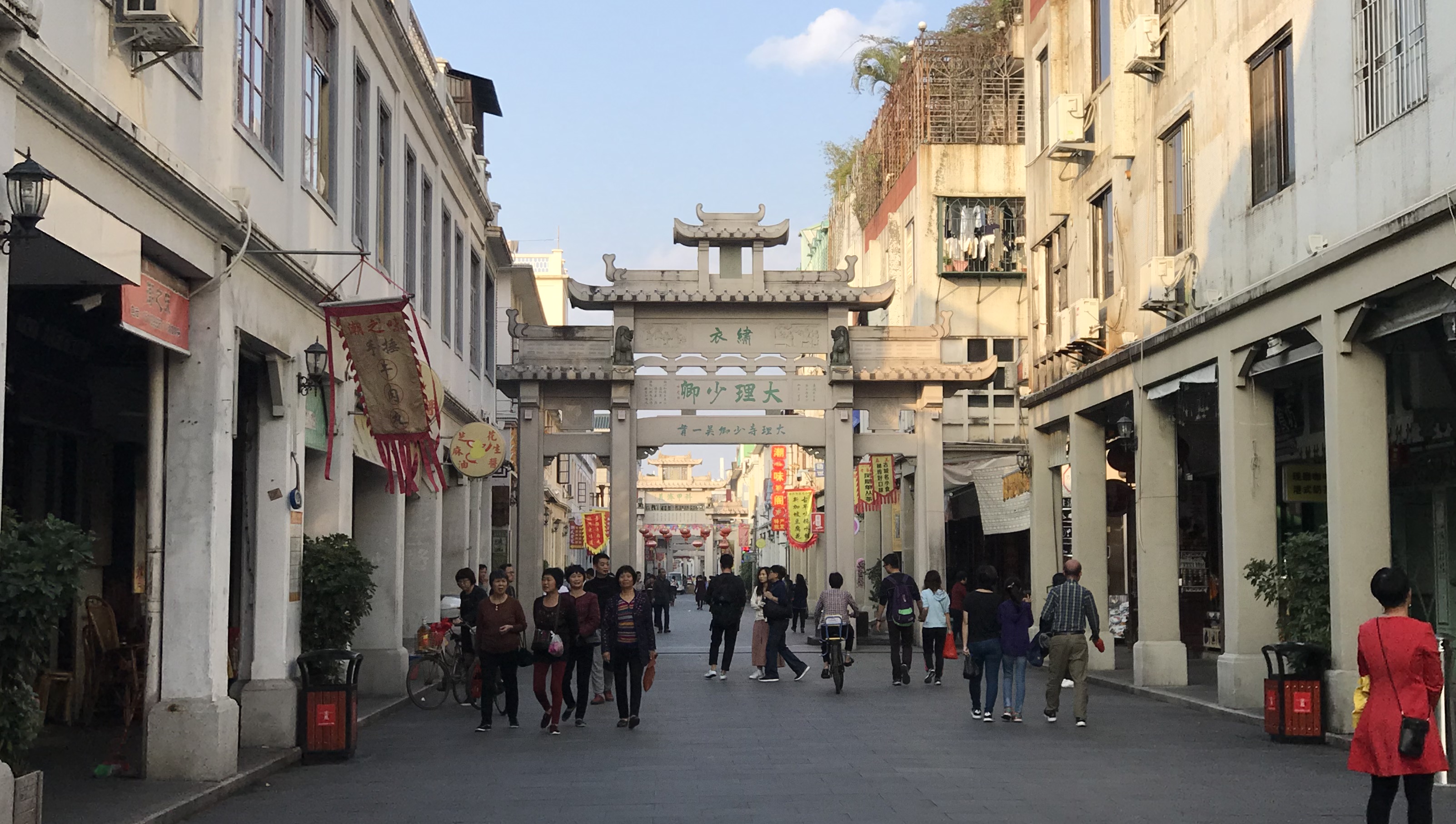
Chaozhou
Chaozhou, alternatively Chiuchow, Chaochow or Teochew, is a prefecture-level city in the Teoswa region of east Guangdong, China.
It borders Shantou to the south, Jieyang to the southwest, Meizhou to the northwest, the province of Fujian to the east, and the South China Sea to the southeast. It is administered as a prefecture-level city with a jurisdiction area of 3,110 km2 (1,200 sq mi) and a total population of 2,568,387. It is also the ancestral hometown of 2.7 million overseas Teochow people.
Getting to Chaozhou
Chaozhou does not have its own airport. The nearest airport is Jieyang Chaoshan International Airport (SWA IATA) in Jieyang. It also serves international flights to Hong Kong and Bangkok on China Southern Airlines. Via Guangzhou Guangzhou Baiyun Airport (CAN IATA) offers Intercity Bus service. You can stay at Shantou Tourist General Corporation. The price of the ticket is ¥20 each.
- 01Chaozhou Railway Station
- 02Chaoshan
From Shantou, there are regularly scheduled buses to Chaozhou from the China Travel Services bus station, for about ¥18-19.
Worth seeing
- 01Chaozhou Museum
- 02Yi Garden
- 03Chaozhou Old City Wall
- 04Guangji Bridge
It was built in the Southern Song Dynasty (1170 AD), a bridge partly made of small boats.
- 05Jiadi Lane
- 06The Lighthouse of Buddha
The lighthouse was used by sailors for navigating the Han river.
Things to do
Taste Local Cuisine: Chaozhou is renowned for its unique Chaoshan cuisine, including Chaozhou beef hotpot (潮州牛肉火锅), Chaozhou porridge (潮汕粥), and Chaozhou stewed dishes (潮汕炖菜). Don't miss the opportunity to savor the local delicacies. Visit Historical Sites: Chaozhou boasts numerous historical landmarks such as Chen Family Ancestral Temple (陈氏宗祠), Fucheng Confucian Temple (富城孔庙), and Kaiyuan Temple (开元寺).
Where to eat
Teochew (Chiuchow) cuisine, the cooking style originating from Chaozhou. Famous examples of local dishes include fish balls (鱼丸), braised goose (卤鹅), cold crab (冻蟹), pork trotter jelly (猪脚冻) and taro paste (芋泥). A popular street dish is oyster omelette (蠔煎 háojiān in Mandarin, 蠔烙 o5 luah4 in Teochew), which differs greatly from the more famous Taiwanese version.
Text adapted from Wikipedia and Wikivoyage, CC BY-SA 4.0. Photograph: Wikimedia Commons (see file page), Wikimedia Commons.